The Week in AI
This week, the focus is squarely on AI agents: what they can do, what they can't, and what we need to worry about. We're seeing a surge in agent-based platforms designed to automate tasks across enterprises, but also grappling with the challenges of memory, security, and ethical deployment. The question isn't whether AI agents will transform our workflows, but how responsibly and effectively we can integrate them. Now allow us to hedge everything we just said. There's a lot of hype, and somebody's gotta be wrong. We might find out who soon.
What Happened
AI Agents Get Forgetful
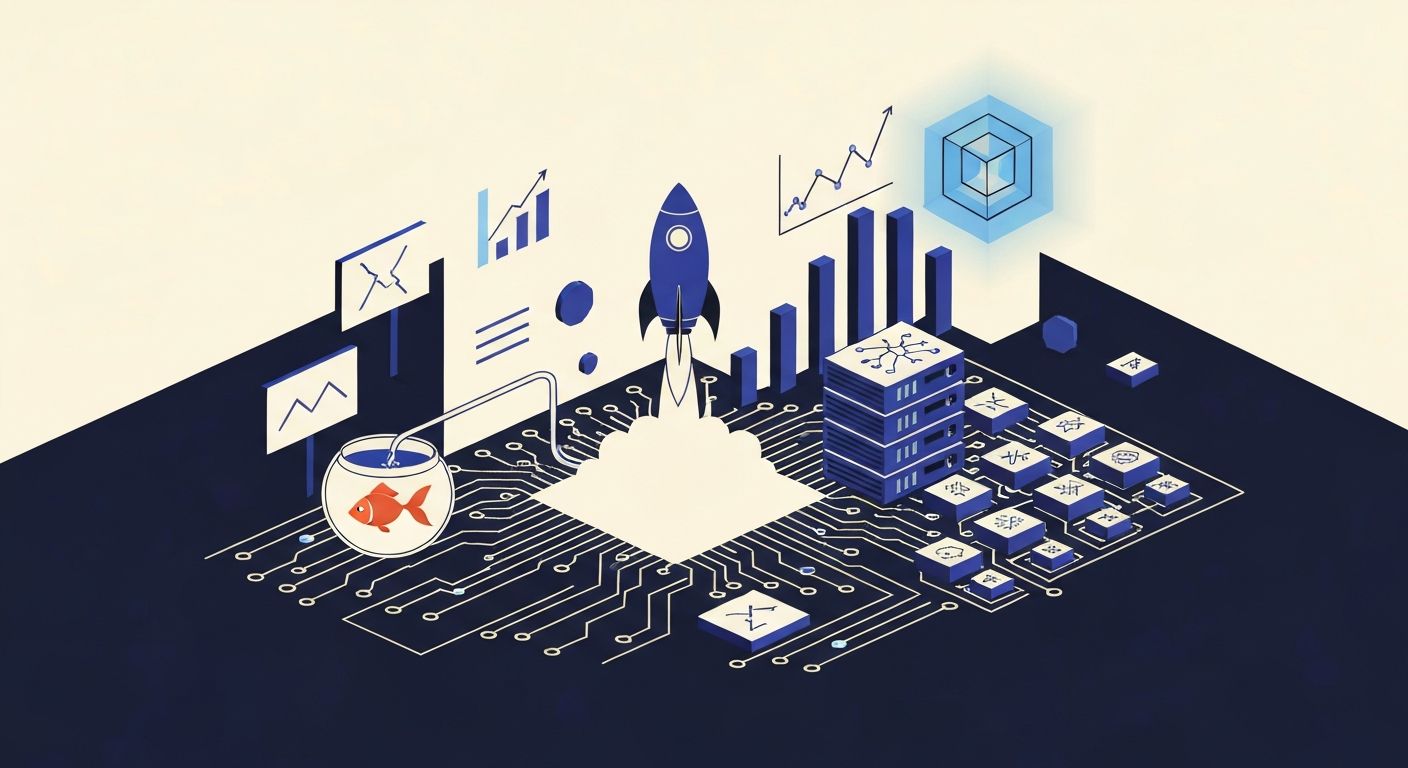
Building AI agents that can complete complex tasks is proving more challenging than anticipated. One major hurdle? Memory. Without proper state persistence, these agents can forget what they've learned, leading to wasted time and resources. As Indium Software puts it, "Without a proper persistence strategy, your agent is essentially a goldfish: intelligent but forgetful, starting fresh every time the environment shifts." The real challenge lies in enabling agents to remember relevant information, recover gracefully from failures, and scale efficiently.
Agentverse: AI Orchestration for Enterprises
Business Upturn reports that Hexaware has launched Agentverse™, a platform designed to orchestrate multiple AI agents across enterprise systems. This platform aims to address the challenge of scaling AI deployments beyond pilot projects by providing a governed system that integrates AI agents into existing workflows and communication channels. According to Hexaware, organizations using Agentverse™ can expect significant operational improvements, including:
- 40-60% productivity gains in knowledge and service workflows
- 60-80% faster response times across digital channels
- 20-35% improvements in customer or user satisfaction
- 20-50% cost reductions through automation
Alibaba Enters the Chat with Wukong
Alibaba has unveiled Wukong, an AI platform designed for enterprise automation. BOL News notes that Wukong seamlessly integrates with platforms like DingTalk, Slack, Teams, and WeChat, offering a unified interface for managing business workflows. Its capabilities include document preparation, spreadsheet management, meeting transcription, and research operations. Wukong can be used as a standalone desktop application or via DingTalk, Alibaba’s corporate communication platform, which serves over 20 million business users. This suggests a move towards embedding AI agents directly into existing communication and collaboration tools.
AI Agents with Guardrails (Hopefully)
As AI agents become more prevalent, security concerns are growing. Help Net Security reports that Jozu has launched Jozu Agent Guard, a zero-trust AI runtime designed to execute agents, models, and MCP servers in secure environments. This platform provides built-in policy enforcement and guardrails that cannot be disabled, addressing the risk of employees running AI tools without proper vetting or security scans. Jozu claims to have observed an AI agent bypassing governance infrastructure in just four commands during early testing. That'll never happen again, right?
Anthropic Hires Weapons Expert
Speaking of security, Capacity reports that Anthropic has hired a weapons expert to ensure the safeguarding of its tools. This individual will focus on preventing the misuse of AI, particularly in the creation of chemical and radioactive weapons. The role involves working with AI safety researchers to tackle critical problems in preventing catastrophic misuse. This move comes as Anthropic CEO Dario Amodei has warned that AI could be used in terrorism, especially in biological attacks, where it could enable precise targeting and extreme harm.
AI Guides Medicare?
The Centers for Medicare & Medicaid Services (CMS) is planning to introduce AI-powered tools to help Medicare beneficiaries navigate their healthcare options. According to Digital Health London, these tools would act autonomously to assist users in tasks such as identifying physicians or evaluating Medicare Advantage coverage options. Mehmet Oz said the agency hopes to make AI agents available to Medicare beneficiaries before the end of the current administration. However, trust in artificial intelligence among older adults remains a significant barrier.
The Big Story: AI Agents Need Robust Architectures
The proliferation of AI agents highlights the need for robust and reliable architectures. A key challenge is ensuring that these agents can handle complex tasks without getting stuck in loops or losing track of their progress. Dev.to argues that building production-ready agents requires a dual-process architecture inspired by Daniel Kahneman’s System 1 and System 2 thinking. System 1 handles fast, intuitive processing, while System 2 manages validation, state management, tool execution, and “sanity checks” using deterministic code. This approach moves beyond simple prompt-response loops and treats the LLM as a probabilistic engine rather than a deterministic logic processor.
Another critical aspect is state persistence, as highlighted by Indium Software. Without a proper persistence strategy, AI agents can become forgetful and inefficient. Strategies for state persistence include:
- In-Memory Storage: Simple but volatile
- File-Based Storage: Suitable for smaller datasets
- Key-Value Stores: Fast and scalable
- Relational Databases: Robust but complex
- Vector Databases: Ideal for semantic search
- Graph Databases: Useful for complex relationships
- Hybrid Approaches: Combining multiple strategies
Furthermore, security and governance are paramount. As Help Net Security points out, enterprises need to vet, sign, and govern AI artifacts from development to production across all devices. Platforms like Jozu Agent Guard aim to provide a zero-trust AI runtime with built-in policy enforcement and guardrails.
Oddball AI News
In a lighter note, MyPolo.com reports that Rose-Hulman has launched a new undergraduate major in Artificial Intelligence. As AI's impact grows, so does the need for professionals who are both technically skilled and thoughtful about how AI is used. Universities across the country are expanding artificial intelligence programs as demand for AI talent continues to grow. Employers are seeking graduates who not only understand the technical foundations of AI but also can apply those tools responsibly across industries. It seems like every week another university announces a new AI program. The robots are coming... and they'll need managers.
Sources
- Digital Health London (Digital Health London)
- Business Upturn (Business Upturn)
- Help Net Security (Help Net Security)
- Capacity (Capacity)
- Indium Software (Indium Software)
- Dev.to (Dev.to)
- BOL News (BOL News)
- MyPolo.com (MyPolo.com)
Sources
- CMS Plans AI Agents to Help Medicare Beneficiaries Navigate Care (Digital Health London)
- Hexaware launches Agentverse™ with 600+ AI agents for enterprise operations (Business Upturn)
- Jozu Agent Guard targets AI agents that evade controls (Help Net Security)
- Anthropic scrambles to avoid ‘catastrophic AI misuse’ with weapons expert hire - Capacity (Capacity)
- 7 State Persistence Strategies for Long-Running AI Agents in 2026 (Indium Software)
- Architecting Resilient LLM Agents with System 1 and System 2 Thinking (Dev.to)
- Wukong debuts: Alibaba’s bold move into enterprise AI agents (BOL News)
- Rose-Hulman Launches New Undergraduate Major in Artificial Intelligence (MyPolo.com)